
Courses - Individual Products and Special Bundles (at bottom)
Call 781-799-6439 to Purchase Any Products with a Credit Card
Wherever you live around the globe, we can ship our products to you. We have shipped materials and taught Skype lessons to Russia, Hong Kong, South Africa, India, Malaysia, Sweden, Spain, Ireland, Great Britain, Bulgaria, Denmark, Singapore, Brazil, Australia, New Zealand, The Netherlands, Germany, Switzerland, Norway, Pakistan, Thailand, Hawaii, Nigeria, and Israel, as well as all across the United States!
New Product Launch!- March 9th Digital, March 15th Physical Product
The Color of Blues $45 - Instant Digital Download
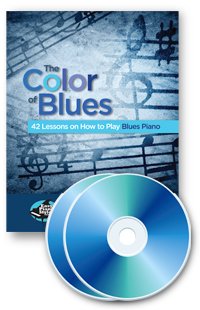

The Color Blues program includes forty two lessons in playing the blues. In this book and 2 DVD program, you will learn:
The 12 Bar Blues form (and variations) in the key of C major
Two and three note blues/jazz voicings for the left and right hands
The C Blues scale (the basis for beginning improvisation)
Six popular blues riffs for the right hand
Four Boogie and walking bass patterns for the left hand
Beginning improvisational techniques
These blues riffs, voicings, scales, boogie patterns and improv lessons can be used when playing the 12 Bar blues. They can also be incorporated into jazz and pop songs (especially R&B, gospel, and rock) as embellishments and accompaniment.
Each pattern is clearly notated in large print and all lessons are explained carefully and demonstrated slowly in a two-four minute video.
The blues is the foundation of all popular music, including rock, gospel, folk, R&B, jazz, soul, and contemporary. So when you learn the blues, you are adding class and authenticity to all of your songs!
The Color of Blues - Physical Product -Book and 2 DVDs $55 (plus shipping)
PianoPalooza - 15 Cool Patterns for Piano Accompaniment- DVD and Flashcards $28.99
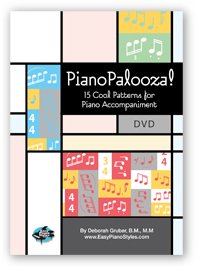
This 50 minute long DVD comes with it a set of 15 handy flashcards with each pattern notated. All cards are held together with a ring for easy accessibility.
These accompaniment patterns are all demonstrated in the key of C and notated in the key of C. The pattern is then demonstrated in another key as well. The pattern is explained and demonstrated at a very easy slow tempo and dissected in terms of the parts of the chord that are being used. Then, the pattern is used in one or two songs. In addition, at least one variation is given for the pattern so you are learning lots more than 15 patterns!
These patterns can be used for many different styles and tempos. Each card indicates the genre (pop, show, jazz....) that the pattern is best suited for.
This program is for accompaniment purposes, whether you want to sing while you play, accompany someone else singing or play in an ensemble with others. It is a beginner method and is an excellent springboard for the more difficult "Playing With Style" program.
Digital Download Version
If you'd like us to send you PianoPalooza in a digital download, just click here and save on shipping too!
35 Ways to Break Up Chords with the Left Hand DVD $18.99
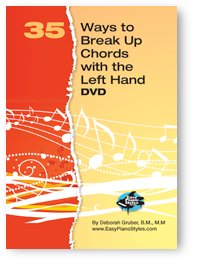
So you have a great fake book with hundreds of songs. You can play the chords in the left hand and the melody in the right hand but it just sounds boring. This DVD will teach you 35 different ways of playing the chord.
The variations on the chord are not fancy harmonic voicings or complex rolls and runs. Rather they are rhythmic and melodic patterns to add motion and flair to your songs.
The variations are divided into three parts - Blues, Chordal and Single Notes. Some are perfect for a Beatles tune and others for Les Miserable. One you might use for a jazz ballad and another for an upbeat Billy Joel tune It's up to you!
Every technique is demonstrated and then applied to a song. Thirteen songs are used for demonstration. Multiple techniques are used in one song so you can hear and compare the options at your fingertips.
Also, this DVD includes an insert which notates all 35 techniques! None of the other DVDs have this feature!
Playing with Style
Book, 2 CD's and DVD $49
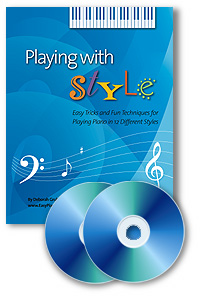
"Playing with Style" is an intermediate level program that teaches students how to play in twelve different styles using accompaniment patterns. This is an accompaniment method of playing which does not include the melody. This is an excellent method for playing in a band or accompanying a singer.
It was written for the student who knows their chords pretty well and doesn't know what to do with them.
This unique system will show you many ways to break up your chords between both hands. You will provide the melody by singing it. Or if you are playing with other instrumentalists, they will play the melody.
By doing this, you are free to add a lot more embellishments and riffs in both hands to liven up your playing and add a sense of rhythm to your music. You will learn 21 different techniques for playing in many different styles.
Written by Debbie Gruber, B.M., M.M..
CHAPTERS OF THE BOOK,
Introduction - Major Chord Chart. A quick and pattern-centered approach to memorizing your chords. Learn the magic formulas that allow you to construct ANY Major, Minor and Seventh Chord.
Chapter One - Up-Tempo Broadway songs. Use the Easy Stride style. Learn how to use a very simple accompaniment pattern to play just about any Up-Tempo Broadway Song! Works for traditional songs too.
Chapter Two - Broadway Ballads. Learn how to turn a chord on it's head (called an inversion) to change the sound. Two beautiful Open Voicings. Then break up those voicings to create "filler" for your songs.
Chapter Three - Country-Western and Folk/Rock. - In this chapter you will learn the "Hammer On" technique which is a very effective way of achieving that country sound. Just a bit of dissonance goes a long way!
Chapter Four - Jazz Ballads. This is a really meaty chapter. You will learn how to play arpeggios, strumming, Full and Half Rolls and the Alternating Thumb technique. Great patterns for the left hand (everyone's weakness).
Chapter Five - Jazz Swing. Learn a simple version of the "Walking Bass" for the left hand that real jazzers use all the time. Then we add chord "punches" in the right hand to fill it out. All applied to "Take the "A" Train".
Chapter Six - Early Rhythm and Blues. In this chapter we explore what I call "pulsing". Then we add a little syncopated left hand to give the song some motion and rhythmic vitality.
Chapter Seven - Rock and Roll. Rock needs a hard-driving beat so we use another syncopated left hand pattern to make this happen. Called "Staccato Beat".
Chapter Eight - Folk or Children's Song. In this chapter, we break up the right hand and left hand chords in various ways. These are called "Simple Broken Chord" Techniques. Lots of cool and easy ways to break up your blocked chords. Sounds great on "Scarborough Fair".
Chapter Nine - Pop Ballad. In this Chapter, we get into more advanced ways of breaking up a chord for the right hand. Sounds awesome on "The First Time Ever I Saw Your Face"
Chapter Ten - The Blues. Learn two boogie-woogie patterns for the left hand and a right hand blues riff that will knock your socks off! You can put these patterns into any rock or R & B song.
Chapter Eleven - Latin Rhythm! Learn a Rhythm Pattern in the Right hand that will quickly add a latin flavor to your songs. It involves putting the chords of the song in a very syncopated rhythm. Once you learn this pattern, you apply it to lots of latin songs.
Chapter Twelve - Gospel. Learn the tricks of how to turn a regular old major chord into a gospel/churchy sound! You will learn the "Bass Third" and the "Amen" progression, plus a particular inversion that will change the sound of your chord.
The Piano EXPRESS
Book and CD $25
Now Available in Hard Copies AND Digital Download

Debbie Gruber's 'The Piano Express' is a valuable addition to the literature of piano pedagogy because it appeals to different learning styles. Students learn the keyboard, treble clef notation, and helpful shapes and diagrams of black and white key patterns add a tactile element. Also, the method imparts basic music theory and chord hierarchic knowledge, a facet that many piano instruction methods lack."
-- Mark Shilansky, Jazz Pianist, Assistant Professor at Berklee College of Music, Lecturer in Jazz at University of New Hampshire and University of Southern Maine
This comprehensive 44-page Book and CD (20 tracks!) is ready to go! This beginner method for adults starts at the very basic level of learning right hand melody notes. Then it introduces the student to the Major, Minor, Dominant Seventh and Minor Seventh chords.
Songs used for demonstration are from the traditional, folk, pop, and show tune idioms. This is a non-traditional, non-classical method consisting of playing by ear and reading chords. Boring note-reading is over. Let music-making begin.
Students also learn basic techniques for accompaniment and how to transpose songs into their key for singing. All chords are diagramed on a keyboard "map" for ease in learning them. Every song and technique is demonstrated slowly and clearly on the accompanying CD.
Here are some great lessons you will learn from this program:
** Surprisingly simple method for learning all 12 Major Chords. This will help you immeasurably in memorizing your chords based on visual patterns rather than note-reading.
**How to finally be able to read from a fake book - We will de-mystify the process and show you just what those symbols mean
**Learn how to Accompany yourself singing! This is a pretty simple process based on solid musical concepts that you have learned in the book. Learn techniques for accompanying a slow ballad and an up-tempo tune.
**Learn three great formulas for constructing major, minor, and seventh chords.
**Stop buying costly arrangments. Develop your own arrangements. It's a much more creative approach to playing the piano! You design how you want to play a song. This program shows you how.
**Learn how to transpose any song into your key. Many people don't realize how easy this is to do and how much of a difference it can make when you are playing with others.
**Learn a very easy trick for figuring out what "key" you are playing in. Then learn the predictable chords that will go with that key. This really accelerates how fast you can learn a song.
**Tricks for reading a melody line easily with your right hand (even if you don't know all of the notes yet). Focus on the intervals and what that means to your right hand piano playing.
**No more bass clef! Everything is melody line and chord. Takes the pressure off all of that tedious note-reading.
So now for the cost of less than one 1/2 hour piano lesson, you will get 6 months worth of lessons that will take you from where you are now to sitting down at your piano or keyboard and playing the music you love to play.
The Piano Express
Booklet and CD - $25
Click on the following Add to Cart button to order hard copies of The Piano Express Book and CD that you will receive by mail:
|
Click on the following Add to Cart button to order digital versions of The Piano Express Book and CD which will be downloadable:
 
|
The Piano EXPRESS
DVD $18.99
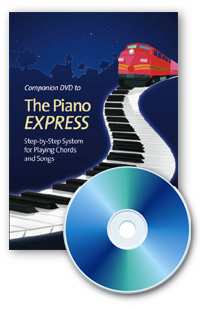
This companion DVD to the Piano EXPRESS book and CD shows you HOW to do everything you hear on the CD. All tracks from the CD are demonstrated so you know where to put your hands and what your chords and melodies will look like as they are played on the piano. Accelerate the learning process so you can pick up any song from a fake book and be able to read it!
Contains 10 tracks which coincide with the 10 chapters in The Piano EXPRESS. 1 hour and 10 minutes of lessons. Play on your computer, DVD player or ipod.
CHORDS TO GO
CD $15.99
Now Available in Downloadable Form!
This 70-minute CD is perfect for getting those chords "under your belt" whether driving to work, listening to it on your ipod while taking a walk, grocery shopping, or sitting at the piano.
All major, minor, dominant and minor seventh chords are covered in ALL inversions. This is a must-have if you are serious about learning your chords so you can embellish them! Here's how it works.
You will be asked to name notes in a chord, for example. There will be a pause for you to answer the question, then the answer will be sung and played so you can see how you did.
Part One - Naming the Notes in Chords
Part Two - Naming the Parts of a Chord(root, third, fifth, seventh)
Part Three - Inversions
Part Four - Inversion (mixed)
The chords you will learn inside and out are the twelve major triads, twelve minor triads, twelve dominant seventh chords and twelve minor seventh chords.
Most songs have six chords or less, so you should be able to play just about ANY pop song out there if you learn your chords! And this is a great CD for doing just that.
EXPRESSIONS -DVD
Pop/Jazz Piano Piano Techniques for the Left Hand
$18.99
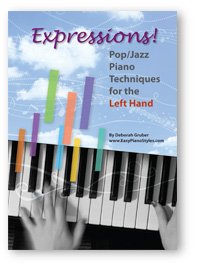
Tired of playing the plain old chords in the left hand and melody with the right hand? Wanna learn how to change it up and make your music "pop" and come alive? Then this DVD is for you.
Expressions will give you thirteen different tricks and techniques for the left hand. Everything from the blues to contemporary jazz, you will learn how to embellish upon those familiar chords. Every topic is demonstrated slowly and clearly, then applied to a song. Topics include:
1. 4/4 Stride(one chord per measure)
2. 4/4 Stride (two chords per measure)
3. 3/4 Stride
4. Full Roll
5. Alternating Thumb
6. Half Roll and Variations
7. Syncopated Half Roll
8. Swing Walking Bass
9. Blues Boogie Bass
10.Barrelhouse Boogie Bass
11.Pulsing
12.Syncopated Bass and Chord Pulsing
13.Octave Leaps
Available in digital format too!
FILLS AND FRILLS -Volume 101 DVD
Piano Embellishments to Jazz Up Your Playing
$18.99
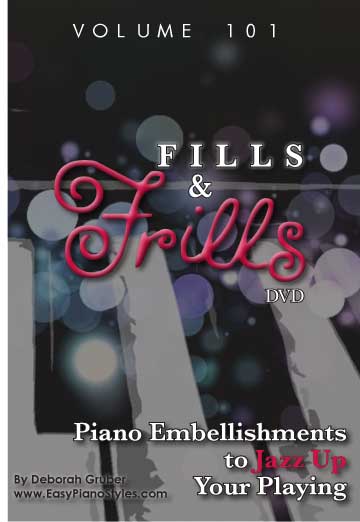
This newest addition to our musical catalogue will help you to embellish a melody with the right hand so your sound is sophisticated and polished!
1. Harmonizing the Melody- Learn how to use notes in the chord to play underneath the melody.
2. Harmonizing with 3rds and 6ths-Discover how harmonizing with notes that are a third and a sixth below the melody will greatly enhance the sound.
3. Turns, Mordents and Grace Notes-Use techniques from the Baroque era to add flair and elegance to your melody line
4. Trills and Tremolos-More Baroque techniques for added interest.
5. Blues Notes-Use simple blues notes (flatted third, fifth and seventh) to give a cool "groove" to your music.
6. Doubling and Raising Melody One Octave-Learn the easy trick of doubling the melody and raising the melody to give a wider palette of sounds to your song.
7. Locked Hands-This very cool George Shearing technique will give you a classic jazz sound.
8. Runs-Use different scales to fill in between melody notes. This adds so much in between phrases.
9. Syncopation of Melody-Learn how you can embellish the melody by altering the melody in interesting rhythmic ways.
10. Hiccups and Seesaws-These two simple tricks will give gentle fills both rhythmically and melodically.
Available in digital format too!
The Final Touch DVD
How to Add Fabulous Intros and Endings to Your Songs
$18.99
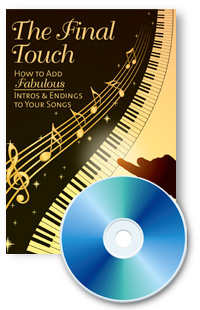
Available as Digital Download!
You will learn six Intros and six endings that you can use for both fast and slow songs!
1. Discover cool chord progressions
2. Intros for songs beginning on the I chord and the ii chord
3. Use of the circle of fifths
4. Pedal tone
5. Blues ending
6. Ballad endings
7. The Duke Ellington ending
8. Descending chromatic chord ending
and more!
Elegant Embellishments!-DVD
$18.99
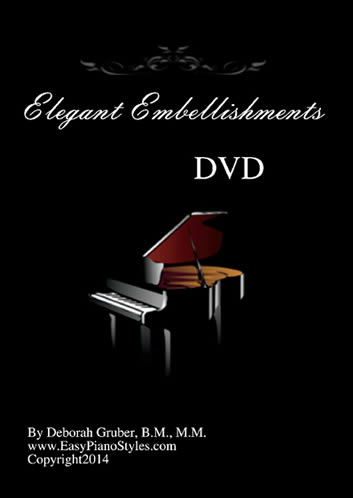
Available in digital format too!
This DVD gives you ten more awesomely effective techniques for embellishing your chords and making your songs sound beautiful and professional. This DVD contains ten complete chapters with all techniques demonstrated slowly and clearly, then applied to a song!
1. Walk Up
2. Staircase
3. Straddle
4. Upper Structure #1
5. Upper Structure #2
6. Arpeggios
7. RH Blues Riffs
8. LH Blues Riffs
9. Cascade
10. Turns
The Piano Bundle #1
The Piano Bundle #1 includes The Piano Express program (book and CD), The Piano Express DVD, and the Chords To Go. If purchased separately, the cost is $59.98.
YOUR SPECIAL PRICE $47.00 (20% off)(plus shipping)
The Piano Bundle #2 - Intermediate Level
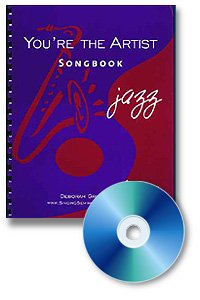
This includes:
The Color of BluesBook and two DVDs
Playing With Style - Book and two CD's and DVD
Chords To Go - CD
You're the Artist - Book and Play Along CD
Expressions DVD
Fills and Frills DVD
The Final Touch DVD
Elegant Embellishments DVD
35 Ways to Break Up the Chords with the Left Hand DVD
PianoPalooza - 15 Cool Patterns for Piano Accompaniment DVD and Flashcards
If purchased individually, the cost would be $268 plus shipping.
YOUR DISCOUNTED PRICE - $199! (25% discount)plus shipping
Sing and Play Bundle - $55
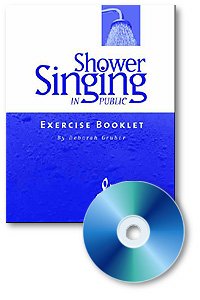
Marked down from $80 to $55 for a 20% savings. This collection includes:
Chords to Go CD
Shower Singing in Public Book and CD
PianoPalooza - DVD and Flashcards
This bundle is perfect for the person who loves to sing and play but doesn't know too much about either one! Use the Chords to Go to really learn how to form the chords, then use the patterns from PianoPalooza to learn how to break them up. Then you can use the 100 vocal exercises in the Shower Singing in Public book to strengthen and train your voice (with a 25-minute vocal warmup included with the CD). Now you're off and running!
The DVD Bundle - 6 DVDS - $89
Value $124 - Savings of $31!
If you know your chords, this is the Bundle for you. You will receive all SIX of our DVDs which includes:
1.Expressions
2. Fills and Frills
3. The Final Touch
4. Elegant Embellishments
5. 35 Ways to Break Up the Chord with Your Left Hand
6. PianoPalooza DVD and Flashcards
Combined, you will learn over 70 different embellishments for your chords!! How cool is that? Never just play a chord in the left hand and a melody in the right hand again. Mix and match all of these in a song.
The Vocal Bundle- Two Books and 3 CDs
$55
(plus shipping)
Includes Shower Singing in Public, Tune It Up and You're the Artist/Jazz
Singing is an athletic event! The body needs to be in a proper position and state of readiness to create a free and energized tone.
The ninety-five vocal exercises in this book work on breathing, posture, connection to breath, diaphragmatic support, intercostal support, articulation, resonance, and flexibility. It also includes the sheet music to four songs as well as an appendix with diagrams of the vocal apparatus.
This book and CD are the classroom materials used by hundreds of students who have completed the "Shower Singing in Public" seminar. This seminar has been taught for 18 years in Massachusetts, Rhode Island, and Oklahoma.
The program also includes a CD with a 25-minute vocal warm-up and accompaniment tracks to the four songs in the book (two versions of each song, one with vocals and one without).
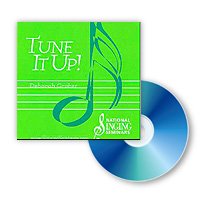
The Tune It Up CD includes ten exercises to strengthen the ear. Consider these "EAR-ROBICS"! The following are the exercises:
1. Five-note scales
2. Major scales
3. Arpeggios
4. Extended Arpeggios
5. Major Seconds (interval training)
6. Major Thirds (more interval training)
7. Chromatic Scales
8. Pitch Memory
9. Harmonizing a Chord
10. Scale in a Round
Call 781-799-6439 to purchase any product(s) with a Credit Card
Enjoy this page? Please pay it forward. Here's how...
Would you prefer to share this page with others by linking to it?
- Click on the HTML link code below.
- Copy and paste it, adding a note of your own, into your blog, a Web page, forums, a blog comment,
your Facebook account, or anywhere that someone would find this page valuable.


